


Evelyn
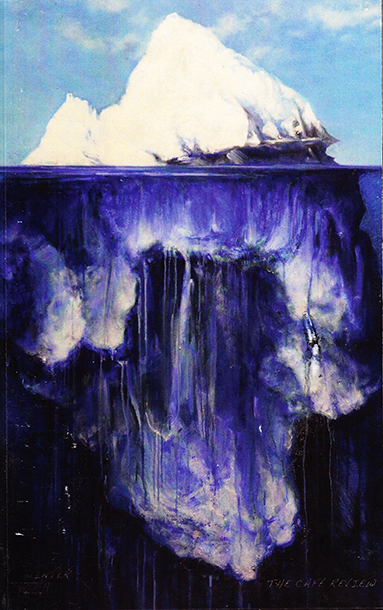
by Karina Borowicz
Our neighbor, she of the white hair
smoothed in a French twist. She
of flowering dresses and earrings
of mute pearl. Hands gentle enough
to unwind perfumed ribbons
from sour apples, and whose wisteria
soothed each bald–headed stone
along the top of the wall.
There was something she had that I
could use now (a paring knife,
a hair pin?) —
something she knew, that steadied
her hands, I wish she’d have given me.
I wish I had asked.
Wisteria
by Dick Allen
The French, I read somewhere,
think cellar door
most beautiful English.
My father’s cellar door
was ugly, unpainted.
It led to the furnace.
But in your name
what’s named is also
wistful, mysterious
as butterflies called
Morning Cloak, Comma,
Dun Skipper, Spring Azure.
In your vine’s bending
a playful history
of where you’ve been.
In your tapering clusters,
pure purple spirals,
labyrinth meanings.
How your spring blossoms
tier over each other.
Ties of close families.
So it’s no wonder
the Japanese call you
“Poet’s Ecstasy,”
to be humble, cavort,
silly, excessive,
ringlets wind –tossing,
that in Japanese stories
you desire, greatly,
cupfuls of sake,
as now, at my window,
your syllable petals
dissolve on my tongue.
Ramshackle
by Dick Allen
black–eyed Susans in a tin cup
over a grimy porcelain wood–burning kitchen stove
beside the washing machine in my mother’s kitchen;
the way hands feel when you run cold water on them,
then dry both in a fluffy towel
on a ramshackle day, a day with some good in it, some bad,
but mainly a mess of things,
rickety, ramshackle, but contains
you without fanfare: an adequate day, not charming,
but enough for your needs, which are really very minor
and can be answered by the usual stand–by basics
of food and water, shelter,
torn jeans
and a ragged old flag in the corner.
Zig-Zag
by Dick Allen
When you’re being shot at, it’s best to run
in an almost zig–zag pattern, varying
a little depending on the time of day,
the terrain, your distance from the shooter,
and the price of strawberries, for that direct path
between here and there and now and then
will most likely get your brains splattered
or at the very least a hole in one shoulder,
should you be lucky. Zig–zag, then. Veer, swerve,
feign left and go right. Zig
when you’re expected to zag. Zag when all reason
would have you zig. As Emerson observed,
“a foolish consistency is the hobgoblin of little minds,
adored by little statesmen and philosophers and divines,”
a statement parodied by the two comedians,
Zig and Zag, once popular in Australia.
Imagine a bolt of lightning, its long downward stroke
and short backwards one laid out on the ground,
or the path of a sewing machine’s zigzag needle stitch,
the cut made by pinking shears, the trace
of a triangle wave or the clear and harsh harmonics
of a sawtooth one — or the sawtooth blade itself,
markings on pottery, the cuts that separate
pieces of ravioli pasta. The Zorro slash
on a dried clay wall, the first letter of Zen. It gets them
every time, the thrill of a quick reversal,
an unexpected change, the sharp turn
you must be capable of if you would well survive.