


Agha Shahid Ali
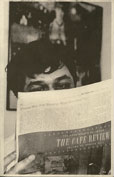
was born on February 4, 1949 in New Delhi and grew up Muslim in Kashmir. He earned a Ph.D. in English from Pennsylvania State University and an MFA from the University of Arizona. Ali held teaching positions at Hamilton College and the University of Utah and was director of the MFA program at the University of Massachusetts — Amherst. He also taught at New York University, Princeton University, and Warren Wilson College. His volumes of poetry include Call Me Ishmael Tonight; Rooms Are Never Finished, a finalist for the 2001 National Book Award; The Country Without a Post Office; A Nostalgist’s Map of America; A Walk Through the Yellow Pages; and The Half–Inch Himalayas. He is also the author of T. S. Eliot as Editor, translator of The Rebel’s Silhouette: Selected Poems by Faiz Ahmed Faiz, and editor of Ravishing DisUnities: Real Ghazals in English. Ali received fellowships from The Pennsylvania Council on the Arts, the Bread Loaf Writers’ Conference, the Ingram–Merrill Foundation, the New York Foundation for the Arts, and the Guggenheim Foundation and was awarded a Pushcart Prize. Ali succumbed to brain cancer on December 8, 2001 in Amherst, Massachusetts. He was 52.
Hena Ahmad
is a professor of English in the Department of English and Linguistics at Truman State University in Kirksville, Missouri, where she teaches post – Colonial literature and theory. She is the sister of the late Agha Shahid Ali.
Caroline Adams
attends Kent Denver School in Colorado (Class of 2012). The 16 – year – old has been writing poetry since the age of 7. She enjoys cross – country running and photography. Caroline is the recipient of the Denver Office of Cultural Affair’s 2009 Poetry in Motion Award and has been published in the Claremont Review and the Student Literary Awards Anthology.
Ghazal for Open Hands
by Martín Espada
in memory of Agha Shahid Ali
December 10, 2001
Northampton, Massachusetts
The imam stands above your grave to pray with open hands,
cupping your spirit like grain in the palms of these open hands.
Poet of Kashmir, the graveyard lathers my shoes with mud
as the imam calls to Islam’s God and lifts his open hands.
Ghazal –maker, your pine box sinks into a cumulus of snow,
red earth thumping on the coffin, dropped from open hands.
There are some today who murmur of the cancer in your brain
but do not know the words for speaking to Allah with open hands.
We listen to Islamic prayers at the cemetery, as we pay for bombs
to blossom into graves in places where they pray with open hands.
Far from here, the bombs we bless are tumbling down in loaves
of steel to tear away the fingers from their hungry open hands.
Shahid, your grave multiplies wild as cancer cells across Afghani earth,
countless prayers reverberating in the well of the throat, in open hands.
I cannot scrape off the mud choking my shoes or blink away the vision
of reaching into the hole for you, my hands open to your open hands.