


Friend
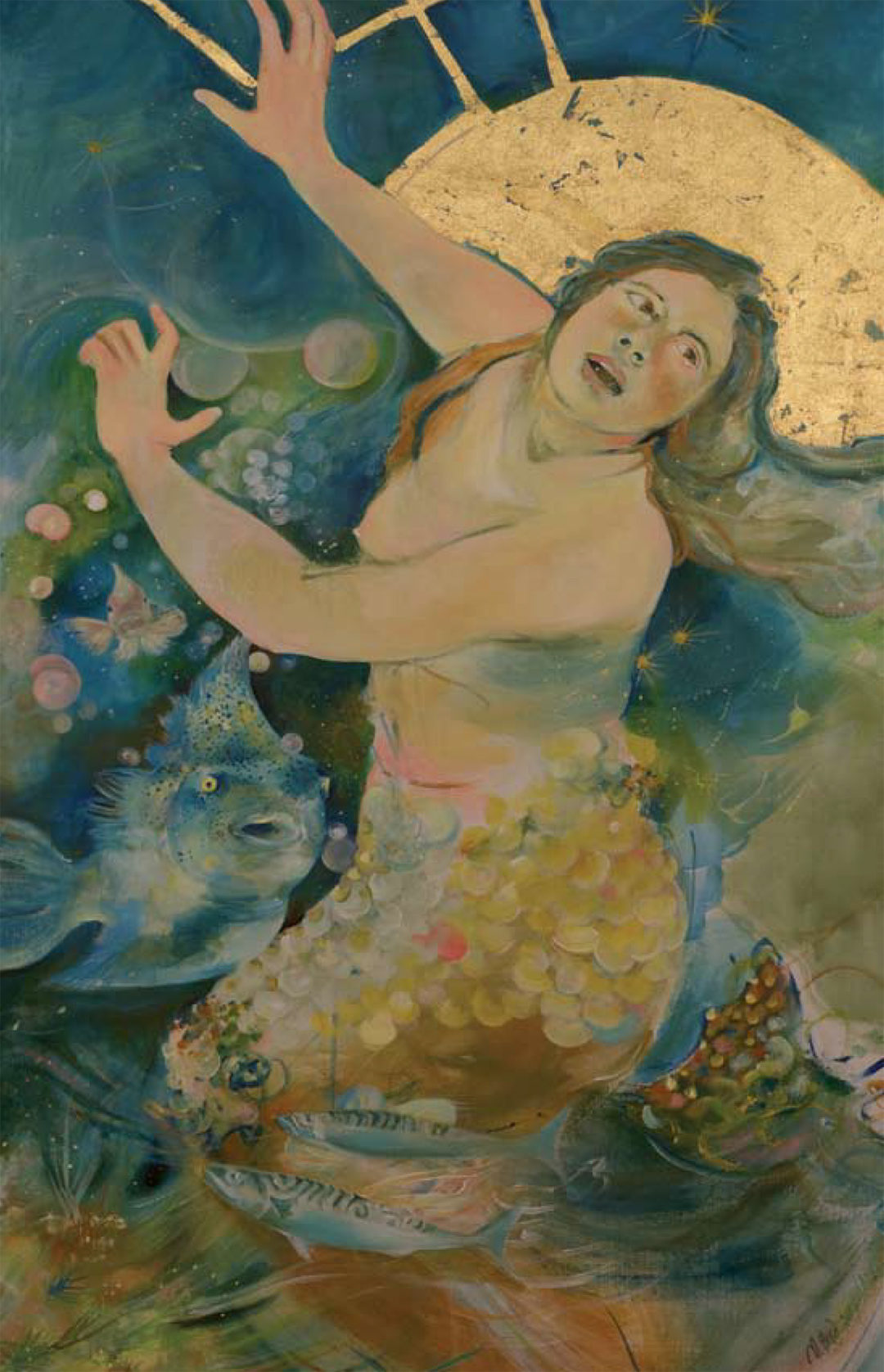
by Hlín Leifsdóttir
Vinur
Friend
Before it’s too late to turn back
he hangs his black coat on the rack in the anteroom
hesitates, just a little
and then sheds his shadow, too
“Wait here, friend,” he says,
gently
as if to a faithful black dog
too innocent to follow
“I won’t be long”
The draught tells him that he won’t be coming back
He doesn’t know that, before he’s even crossed the threshold,
his shadow has snuck away
it bleeds into the crisp darkness outside
When nobody’s watching
Translated by Meg Matich.
Decision
by Hlín Leifsdóttir
Ákvörðun
Decision
When she realizes the situation is hopeless
she decides to leave herself behind in the mirror
its frame, gilded
surrounded by pictures of dead relatives
She shows up without herself at the restaurant
“You look great,” says her enemy.
“You’ve really lost weight.”
Translated by Meg Matich.
Study
by Jón Örn Loðmfjörð (Lommi)
I.
In my study beside to a small table and tattered couch,
a bookshelf jerrybuilt from wooden planks
and big flathead screws that stuck a full four centimeters
out of the wood.
The shelf was crammed with math books, biology books,
textbooks of all types and for a long time,
every volume of The General Practitioner,
that is, until my six-year-old sister decided to start hiding them
under her bed, self-diagnosing when she couldn’t sleep,
and then announcing to mom the next day that she had
a combo of pyloric stenosis, subcutaneous edema, hysteria, and gastritis.
II.
I bored quickly of staring at the shelf and so started
to clamber through the books to get to know them
better. On one such expedition, I found two things I’d
never seen before: a crystal bowl and a book of poetry. If I stared
at the crystal bowl, I could see some sort of reflection, but it was too
distorted and blurry to do me any good. The poetry
had nothing to do with science and didn’t seem like it’d
be useful for diagnosing diseases.
If my dad’d walked in while I was probing the poetry book,
I’d’ve asked him about the Boer Wars and other minor armed conflicts.
Then he would’ve gotten out a volume of his German encyclopedia,
flipped hastily through, muttering over the German text, sighing
and yawning and then asking if I had some math homework I should be doing —
giving me time to hide the book.
Translated by Larissa Kyzer.
Tools
by Jón Örn Loðmfjörð (Lommi)
In elementary school, I learned
that man is the only
animal
that has sex for pleasure
and the only one that
uses tools
(though not necessarily during sex).
The way I understand it today, all animals
screw just for the fuck of it,
but man is the only one that uses
tools to produce other
tools.
Entire generations before me
deliberated over how tools produce
class divisions.
But what I’m more interested in knowing is
how tools change the way we think.
Many people find techno monotonous.
DJs fill out spreadsheets,
dragging and dropping sounds into cells
that are plotted down to the last
millisecond.
Do they start thinking like
their tools? What part do their tools
really play in their creations?
Translated by Larissa Kyzer.