


Fastness: A Translation from the English of Edmund Spenser
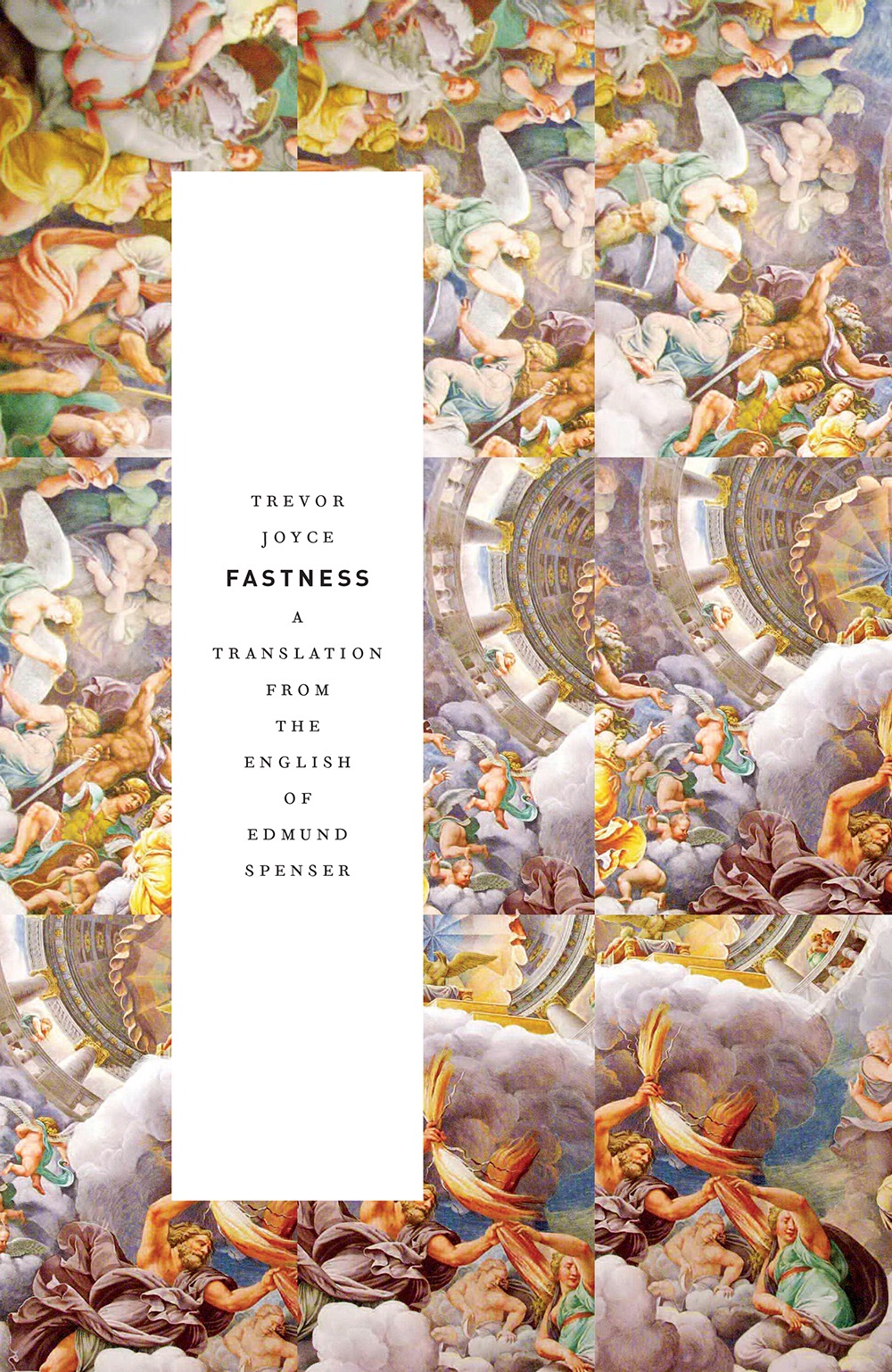
Check out this new book by Trevor Joyce, a wonderful poet who we had the great privilege of publishing in our Fall 2016 issue. Fastness is being released by Miami University Press. Click the following link to learn more: http://www.spdbooks.org/Products/9781881163619/fastness-a-translation-from-the-english-of-edmund-spenser.aspx
Margaret Randall Interview
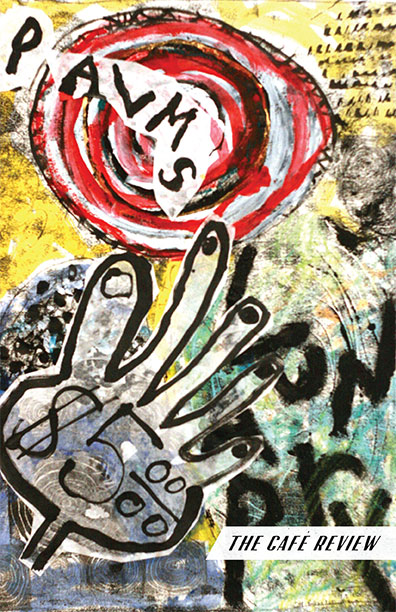
Interview
with
Margaret Randall
conducted by Kevin Sweeney
via email on January 15, 2017
KS: I loved your poem “I Like Being Old” that appeared in The Café Review, Fall 2016. This passage sticks out:
It’s all good. More than good as I embrace
this red rock landscape, this place
that belongs to me
Is that the landscape in New Mexico where you now reside?
MR: Yes, when I speak about a red rock landscape, when I speak about vast spaces and open sky and brilliant desert colors, I am almost always speaking about New Mexico. I have lived in many places, and many of them continue to hold something of “home.” But New Mexico is special. My family moved here when I was ten, and I spent the next eight years getting to know some of its secrets. Then I moved back to New York and a few years later to Latin America, where I spent 23 years in Mexico, Cuba, and Nicaragua. When it was time to come home, I always knew I would return to New Mexico. My parents were still alive then, my brother still lived here (he still does) and so family connections went into the decision. But the colors of the land, the light, the vast sweep of sky were also important. The language of this land can be found in much of my writing.
KS: When you say “It’s all good,” is that a political statement or is it a statement about bodily health and /or spiritual well–being? Maybe all of the above?
MR: In this particular poem, the line “It’s all good” refers to my good fortune at feeling healthy and whole at 80. But politics has always been broader to me than partisan positions, so the statement also reflects my spiritual well–being. It would be hard to call this political period in U.S. history good, in view of the recent neo–fascist takeover.
KS: If the previous question didn’t provoke a mention of Donald Trump, let me ask one now. Given your life’s work, is it particularly disheartening to see such a person assume the presidency? How should those whose political views are similar to yours prepare for the next four years in the United States?
MR: I hesitate to mention Trump’s name because he is so much about putting himself front and center: that sociopath’s penchant for making everything about him. The man is disgusting and dangerous, but he is also part of a global trend right now: Brexit in England, Macri in Argentina, the coup against Rousseff in Brazil, the rise of forces such as LePen in France. The failure of neoliberal policies to solve people’s real problems has opened the door to neo–fascism. It’s going to be a very hard next four years, during which we can expect to see many social gains reversed. As for how people whose political views are similar to mine should prepare, I think we have to be alert, resist in every way we can, and also continue to do our own work, whatever that may be.
KS: In your introduction to your book Risking A Somersault In The Air you refer to Haydee Santamaría, about whom you’ve written an entire volume, I’m hoping to read. In a brief footnote in “Somersault” you mention her suicide. I imagine her as someone who’d been striving mightily to bring change and save the world she knew. In Richard Feinberg’s review of your book he notes: “A feminist sensibility adds poignancy to Randall’s tender, impressionistic portrait of a self–effacing and melancholic yet much revered Cuban fighter.” What caused her despair? Would it be too broad a statement to say she was a victim of patriarchy?
MR: Haydée Santamaría was one of the great figures of the Cuban revolution, female or male. She was an extraordinary woman: brilliant, creative, committed. Patriarchy victimizes women (and also men, often rendering them less than human in their treatment of others), but I wouldn’t say that Haydée was a victim of patriarchy because I wouldn’t say that she was a victim. She was quite forceful in fighting sexism within the Cuban system; as a member of the Cuban Communist Party’s Central Committee she several times appeared at meetings dressed as a man to bring attention to certain injustices. Still, I don’t believe any of that prompted her suicide. To understand why she took her own life, you have to know what her life was like. She was one of only two women who took part in the revolution’s first military action, and in that action she lost her brother and her lover at the time. Their deaths were only the first in a long string of losses. She suffered from depression, and I don’t think depression was understood in the 1970s as well as it is understood today. But Haydée’s life was complex. I recommend the book I wrote about her, Haydée Santamaría, Cuban Revolutionary: She Led by Transgression, which Duke University Press published in 2015. I think that book may be of special interest to artists and writers, since Haydée nurtured Cuban artists and writers to such an astonishing degree.
KS: It seems that poets who write and especially like to read political poetry aren’t the best source if you’re looking for a good spiritual poem. However, despite your political bona fides, your poem, “Benoit Sees the Shapes,” looks pretty spiritual to this reader, especially these last 3 lines:
I want to forget the contest itself leads to oblivion
and end this poem in hope
even as the evidence tries to stare me down.
You seem to suggest there’s a possibility of hope here but maybe it’s a long shot. Am I right about that?
MR: Yes, you are right. But the thing is, Kevin, I really do reject the idea of political poetry as a discreet category. For me there is only good poetry and bad poetry. A good poem (and a bad one too, of course) can be about anything. For me, one’s ideological outlook and one’s spirituality are of a piece.
KS: So what about Castro’s Cuba? After his death the Washington Post put out an extremely harsh editorial on his life and regime. They saw him as anathema to gays, women, and basically to anyone who disagreed with him? Will it be better or worse there now that he’s gone?
MR: I didn’t see that piece in the Washington Post. It surprises me to hear it described Fidel as “anathema to gays, women, and basically anyone who disagreed with him.” The truth is, Fidel worked hard to bring equality to women as well as racial equality. It’s true that LGBTQ people had to struggle longer in Cuba, but that really can’t be blamed on Fidel, who took power in
1959 — back then Stonewall was 20 years in the future in the U.S.
To my mind, Fidel was a great leader, someone who did the impossible to shape his country in a new image of justice. His death produced a great sadness in me. He was also human, and made many errors. I point to some of these in my memoir of eleven years living in the country, To Change the World: My Years in Cuba (Rutgers University Press, 2009). Incidentally that book — critical as it is — has just been published in Cuba and will be featured at this year’s Havana Book Fair. I’ll be going to Cuba for that next month. But getting back to Fidel, he shepherded social change even as the United States attacked him economically, militarily, diplomatically, and culturally for more than half a century: not an easy task. As for whether Cuba will be “better or worse” now
that he is gone, the changes the country is undergoing — and there are many — don’t really have much to do with Fidel’s death. He stepped down in 2008 and his brother Raul took over. Then, in December 2014, the Obama administration and the Cuban government reestablished diplomatic relations. This gave way to many changes, although the decades–old U.S. economic blockade is still in effect. But Cuba has been adopting many aspects of a market economy while trying to maintain its greatest socialist achievements, such as universal health care and free education. There are many problems. It is a small country with a weakened infrastructure and an unevenness in terms of development. It’s not going to be easy to make such a complicated transition. But I have great faith in the Cuban people, and believe they have some surprises in store for us.
KS: The post–Somoza Nicaragua you wrote about sounds pretty amazing with peasants and regular people writing poetry and creating art. But is Utopia always a fantasy as some poets and philosophers have suggested? The fact that you can write a poem titled “I Like Being Old” seems to indicate it’s possible to live in a sane and fair world. True?
MR: I believe it is possible to create and then live in a sane and fair world. But I also know that powerful forces of criminality and greed oppose such change. The first few years of the Sandinista Revolution in Nicaragua were exciting, but then those forces took over and those who call themselves Sandinistas today have no relationship to what we dreamed of back then. I hope the younger generations will be able to mobilize for a change that is less vulnerable to that criminality and greed. It they can’t, I don’t think the world itself will be either sane or fair; global warming, endless wars, and hatred of difference will have done away with humanity.
KS: In your interview with Ernesto Cardenal you refer to “the religiosity of the Nicaraguan people” and “the importance of faith in their lives” in what seems like a favorable way. Does that mean you don’t see religion as the opiate of the people?
MR: I am a convinced atheist, but also consider myself to be a spiritual person; my spirituality is based in nature rather than in some invented god. As for religion being the opiate of the people, that line is so often quoted out of context. Religion, political manipulation: any of it can be “the opiate of the people” if it is used to control and dominate. People need to be free to acquire knowledge and make their own decisions about what they want in life.
KS: Cardenal spoke to you about his experience with Thomas Merton who, he said, “always hated the American way of life.” Was that true of you too, at least in the past, given your long absence from the United States?
MR: I love American cultures and landscape. And I believe the American people, like most people anywhere, are decent. What I hate is corporate greed, consumerism, lies, and manipulation.
KS: Is it a fair question to ask you, or for all of us to ask ourselves, where do the monsters come from? I’m thinking of the Somozas in Nicaragua, D’Auboisson in El Salvador, Mugabe in Zimbabwe, Mobutu and Kabila in the Congo just for starters.
MR: These monsters come from where we all come from. They weren’t born monsters. We need to create societies in which understanding and justice prevail, not the conditions that permit the Somozas, Mugabes, or Trumps to gain power.
KS: Were you starting out today, do you think you would still be drawn in the same way to Latin American, or might other regions, like Africa, draw your attention?
MR: This is a difficult question for me, Kevin. I lived for 23 years in three Latin American countries and three of my four children live in Latin America. Latin America is a part of me today, such that it is impossible for me to contemplate it not being part of my history. On the other hand, I find other parts of the world interesting as well: certain African countries, Laos, Cambodia, Canada. Every country has its fascinating cultures. It’s all about getting to know them and discovering which make you feel at home.
A Blessing
by John Field
Land mines exploding, red memories
On the battlefield infected and runny.
Then home again way too thin
And screaming flashbacks
In the middle of the night you laughed off
Six times faster than a fool can weep.
First chance comes you’re wheeling down
An icy country road at seventy miles per hour
And a pretty good driver, too,
(Holy Jesus, what a ride!)
Until crunch or metal versus metal,
Three broken ribs and one collapsed lung
Instead of an airbag. The other driver died.
Brother, brother, by what frayed thread
Does your life hang but never break?
In the green and leafy world
We lived in forty years ago
filled with jump starts, sudden firsts,
And false alarms
Natural selection sparkled in your eyes
Like surges of electro–kinetic energy
Each time you vandalized
Another lovely girl’s heart,
Whereas I was one of the guys
With an inferior allotment of muscles
Who knew what it meant
To have never been kissed by a girl.
On the football field you were masculinity’s
Bodyguard, at home the dining room table’s
Flamboyant skipper. I picked at my vegetables,
Totally dunced by your appetite for life.
Mine was always out to lunch.
Pool–hall scrapper, cock of the walk, class clown,
What’s left to astonish us? Here’s the plot:
Sixteen years old. Just. Midnight. Dead of.
A gunnysack stuffed with plunder
Slung over one shoulder, a full moon over the other,
Everything swell until the fuzz
Nabbed you with the goods. Mom believed
It must have been a disease you had
That got you arrested for burglarizing
A neighbor’s house.
Eyes welled up with engineered regret
(Oh how you played that role!)
You stood in front of the judge
Without a moral sense
That anyone could measure
And swore on the courthouse bible
A thousand times false
That from now on you’d show the cops
A lot more respect for the law.
But of course you didn’t, dead–set to ignore
The judge’s cautionary tale
About years young men like you
Wasted horribly in door–less county jails.
Dad was a man of connections,
The reason you got off with probation.
A month ago I watch you walk on water
Like the second coming of the Lord,
But on sacred and dangerous spaces
Steps must be gentle, yours were not
And you paid dearly for that
The moment a stroke
Uncorked you from your water skis.
Ashamed of its practical joke
The lake washed you ashore,
Soiled merchandise returned to the store
Gift–wrapped in a body
With a person still alive inside it
But much too sick to get well, your doctor said,
And only a little time left to live.
Not so. Because a dead man’s float
Is always face down and yours was up.
Flat on your back and half–dead
But still center stage
We gathered round your hospital bed
And got down on our hearts instead of our knees
The moment you opened your eyes
In a sudden bewilderment of where and why.
Then you figured it out like a regular Houdini
And brought down the house with a cocky grin
That spread to the width of a blessing.
Design for a House
by John Field
Design for a House
after a poem by Jonathan Holden
Sometimes a dream that grips us
we become.
In the house I’m designing
my wife, kids, cats, dogs, and I
will be the studs that hold up the rafters.
I’ll build a front door
shaped like an unequivocal invitation
to come in! Come in!
Erect walls of glass
that will put our eyes outside
watching sun–checkered flowers
practice their holiday colors
stupendously
while squirrels with nuts in their heads
for snacks
scamper about on the fresh–cut grass.
And invent a new kind of skylight
that will air–condition the rooms
on hot afternoons
by inviting the shadows of clouds
to roost on the roof.
But if it gets too cool or too dark
I’ll snap my fingers
and shoo the entire flock away.
Yes, yes — call me a dreamer if you will
made glad by the smell of a damp dog
lying fast asleep on the kitchen floor,
and sad when my grandfather
clock’s metal heart
stops beating in its wooden chest.