


A Shepherd’s Voice
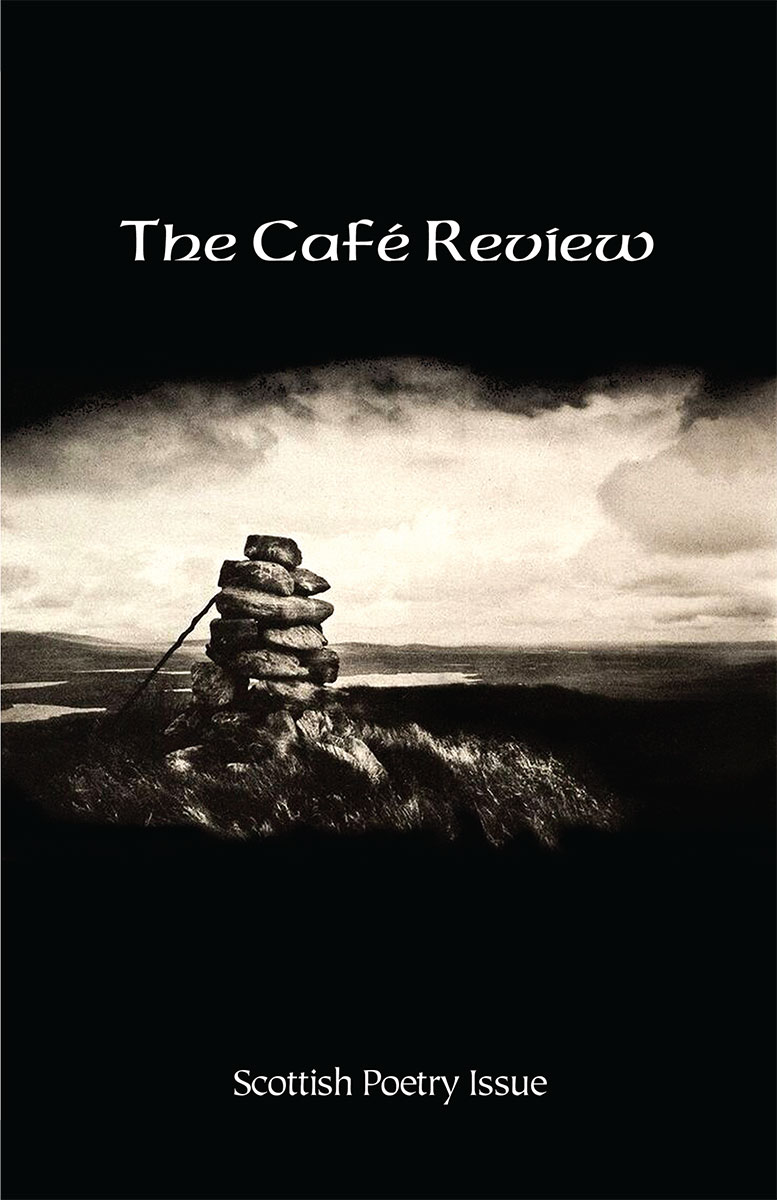
by Anna Crowe
A Shepherd’s Voice
after 2 pictographic clay tablets from
Tell Brak, Syria, c. 4000 BCE
The river the clay was dug from
has vanished, so we must imagine
ducks squabbling
among the rushes, the flight
of cranes at sunset, night
erupting with bull–frog cries.
What’s scratched into the clay
is a voice, a shepherd’s, who declares
— Here are 10 goats
— Here are 10 sheep
His dry receipts remain
to tell us that barren desert
was pasture, watered, green;
and though his flocks have shrunk
to two baked bits of clay,
what’s scratched there is
the shepherd’s voice, calling
his beasts into our field of vision —
some lop–eared with rough brown coats,
others whose big horns coil like rope:
— Here are 10 goats
— Here are 10 sheep
coming to drink, bells clunking, sending up
bird–cries; the reeds confer, the water laps.
At Hallan Cemetery
by Angus Peter Campbell
( Aonghas Phàdraig Caimbeul )
At Hallan Cemetery English Version
I call by to see my mother and father
and they welcome me in,
though they weren’t expecting me
and nothing’s ready.
She’s wearing an apron and is baking,
the flour covering her arms,
and he’s standing at the work–bench
planing a piece of wood: a window.
The door is wide open and through it
I hear music: piping coming
down hill, and isn’t that someone
singing Fear a’ Chòta Ruaidh ?
I’d like to be silent,
but my father says this is not
the time. This is the time, he says,
to honour everything that is alive.
Like that little bird over on the wall.
It flies, and the higher it ascends,
the clearer the song. The dead shall
awaken when the living arise.
We lose ourselves talking.
They want me to stay, for
the tea is about ready, and the bed
all made, with new warm covers
but I tell them I must go away,
and will call back some other day.
They stand at the door, waving,
as I close the gate behind me.
by Aonghas Phàdraig Caimbeul Scottish Gaelic
( Angus Peter Campbell )
Aig Cladh Hallain Scottish Gaelic
Tha mi tadhal air m’ athair ‘s mo mhàthair,
‘s tha iad a cuir fàilt’ orm,
ged nach robh dùil aca rium
‘s ged nach eil sìon deiseil.
Tha aparan oirre–se ‘s i fuinne
‘s a’ mhin a’ còmhdachadh a gàirdein,
‘s tha e fhèin na sheasamh aig a’ bheinge
a’ lcradh pìos fiodh: uinneag.
Tha an doras fosgailte agus troimhe
cluinnidh mi an ceòl: pìobaireachd
a’ tighinn a–nuas an cnoc, agus saoil
nach e siud Fear a’ Chòta Ruaidh?
Bu mhath leam a bhith sàmhach,
ach tha m’ athair ag ràdh nach e seo
an t–àm. Seo an t–am, tha e ag ràdh,
urram a thoirt dha gach ni tha beò.
Mar an t–eun beag ud thall air a’ bhalla.
Tha e falbh, ‘s mar as aìrde dh’èireas
e ‘s ann is soilleir an ceòl. Dùisgidh
na mairbh nuair a dh’èireas na beò.
Tha sinn gar call fhèin a’ còmhradh.
Tha iad ag iarraidh orm fuireach, oir
tha an tì gu bhith dèanta, ‘s an leabaidh
uile deiseil, le cuibhrigean ùra blàth
ach tha mi ag ràdh gum feum mi falbh
is gun tadhail mi latha eile. Tha iad
a’ seasamh aig an doras ‘s a’ smèideadh,
fhad ’s tha mi dùnadh a’ gheat’ as mo dhèidh.
Alasdair
by Angus Peter Campbell
( Aonghas Phàdraig Caimbeul )
Alasdair English Version
Some things were public.
How carefully you thatched,
gathering the best marram, kiln–
dried.
Then when the Spring work was done,
leaning towards June,
the old ladder
emerged
propping up the west wall. Evening
was best, after the machair–work,
you flat out on the roof,
pleating
the twine as carefully as a young girl
braiding her doll’s hair.
Your night prayer was quiet
as grass.
Aonghas Phàdraig Caimbeul
( Angus Peter Campbell )
Alasdair Scottish Gaelic
Bha cuid de rudan follaiseach.
Cho faiceallach ‘s a bhiodh tu tughadh,
am muran as f hèarr agad, tiormaichte
às an àtha.
Nuair sin, às dèidh obair an Earraich,
a’ sìneadh dhan Ògmhios,
nochdadh an t–seann f hàradh
a–mach
an–aghaidh a’ bhalla shiar. Feasgar
a b’ f hèarr, air ais on mhachaire,
‘s tu nad laighe air a’ mhullach
a’ fighe
nan sìomain mar chaileag òg
a’ preasadh gruaig na dolaig.
Ùrnaigh na h–oidhche cho socair
le feur.
The Ascension of St Christina the Astonishing
by Andy Jackson
The Ascension of St Christina the Astonishing
Patron saint of millers
Above you all I loved my three–fold God;
More than Father, face–down in the pasture, Son
lost among the grains, or the Ghost of the haar.
My unclean scent was in the snouts of dogs.
I was racked upon a water–wheel, ran through thorn
and thistle yet emerged as white as winter flour.
I was clothed in colours of the dusk.
Now at death I lie as heavy as a bulging sack —
a woman made from miracle and beeswing,
looking for forgiveness in the depths of pain.
The weight of many madnesses are on my back.
I could be the reason for your unbelieving.
I am the black ball of smut in the dunes of grain.
Now I am hulled like barley from my husk.