
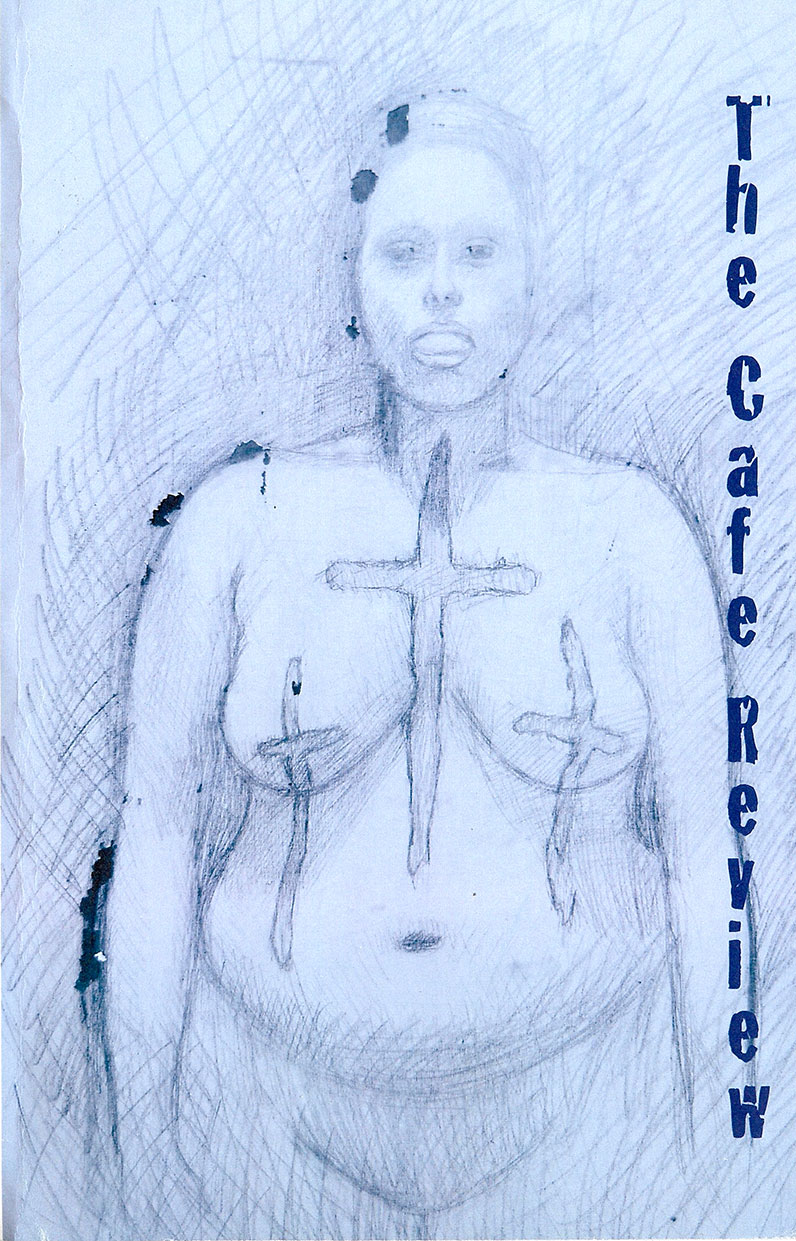
Winter 2010 Issue
Jack Elliot Myers
November 29, 1941 – November 23, 2009
Trying to capture a life and a spirit on a page is daunting, especially when that life belonged to a friend, mentor, and poet of incisive humorand stunning sensitivity. It was our hope that the many voices in this issue of Jack’s friends, colleagues, former students, and fellow seekers would help those who never knew him to understand how deeply we have been touched by his passing. To learn about Jack’s life and his extensive contributions to the literary world, please go to www.thewritersgarret.org.
Our Winter 2010 Issue features poetry by Harriet Sohmers Zwerling, Carol Westberg, Leslie Ullman, Daniel Nathan Terry, Bruce Spang, Christopher Soden, Betsy Sholl, Christopher Russell, Suzanne Rhodenbaugh, Naomi Shihab Nye, B.Z. Niditch, Ariana Nash, Jack Myers, Daryl Morazzini, Jim McGarrah, Michael Macklin, Sandee Lyles, Joanne Lowery, Sydney Lea, Richard Jackson, Norbert Hirschhorn, Alexander Etheridge, Patrick Dillon, Brad Davis, Mark Cox, Paul Christensen, W.E. Butts, Andrea Blancas, Robin Behn, Ralph Angel and Marian Aitches. With artwork by Stephen Koharian and Jessica Goldfinch. Reviews by Michael Macklin and Meghan Cadwallader.
Fall 2009 Issue
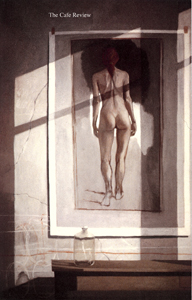
Our Fall 2010 Issue features poetry and translations by Steven R. Weiner, Adam J. Sorkin, Dan Sociu, J.B. Sisson, Russ Sargent, David J. Rothman, Oliver Rice, Janice Miller Potter, Simon Pettet, Mihaela Niţă, Dan Murphy, Paul Muldoon, Thomas R. Moore, Cory McClellan, David McCann, Richard Martin, Taylor Mali, Jami Macarty, Gibson Fay-LeBlanc, Mark Hedden, John Harris, Jody Gladding, Laura Delia Quintero Garcia, Kathleen Ellis, John Driscoll, M.D. and Paula Cisewski. Artwork by Norman Lundin, Kimberly Convery, Wayne Atherton and Andrew Abbott. Reviews by Adam Tavel, Claire Hersom, Michelle Demers, Melissa M. Crowe and Wayne Atherton.
Watch online an Issue of the Poets Cafe right now!
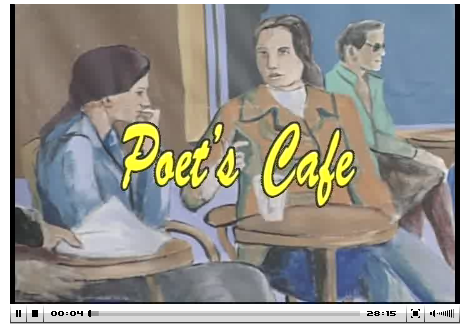
Our very own Steve Luttrell has started a show called Poet’s Cafe. You can check out the October episode here.
This episode features Maine State Poet Laureate Betsy Sholl and musical guest Marie Moreshead.
r
r;
r
r
Summer 2009 – Tribute to Juan Gelman
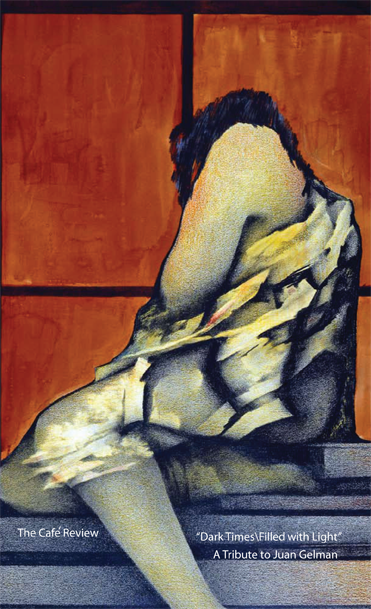
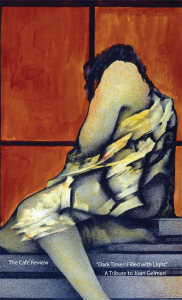
The summer 2009 issue of The Café Review, guest edited by poet Paul Pines, is a tribute to the Argentinean poet Juan Gelman. Here is an excerpt from the forward written by Ilan Stavans. get a copy of this amazing issue today by becoming one of our subscribers. To view a couple of Juan Gelman’s poems that atre contained in this issue, check out excerpts under our current issue section.
” (Juan Gelman)…fits into the tradition of Latin American poetry by the relentless courage he displays to speak truth to power. Where did the Argentine experiment go wrong? How could it reach such levels of human depravity after it was generally seen as the most advanced, cosmopolitan country in the Southern Hemisphere? Time and again Gelman has pondered these questions, but he refuses to answer them. The most a poet can do is describe what he sees. In a 1980 poem about the prisoners’ loneliness, he described the protagonists as “dreaming they’re dreamed / quieted / they’ll never see other faces growing / leaning out / continued / in this sun / someday in the sun of justice.” And in his remarkable piece, “The Art of Poetry,” dated 1961, he affirms: “I’ve never been the owner of my ashes, my poems, / obscure faces write them like firing bullets at death.
