
XXX Poems
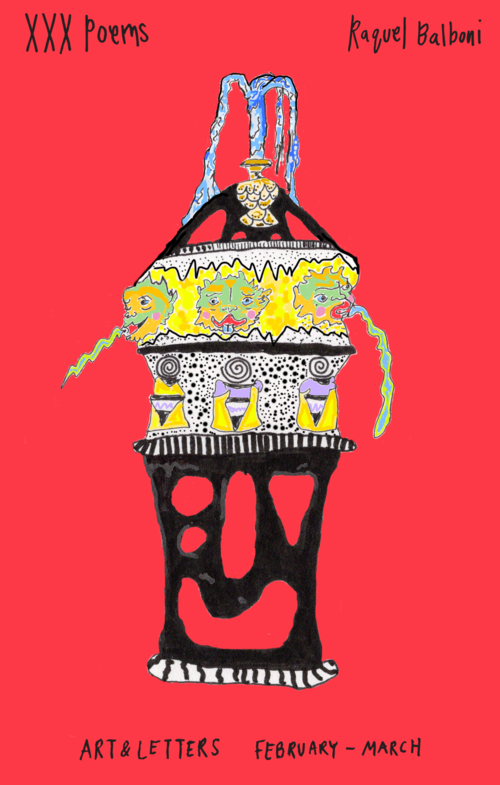
XXX Poems, by Raquel Balboni,
Arts & Letters, February–March 2020,
47 pages, paper, $15.
There are 30 poems in Raquel Balboni’s first book, and they are edgy, risky, and frisky in their business. And it is business that they are about: the business of sanity, love, sex, and identity, all streaming by in the reflection of a funhouse mirror.
Ms. Balboni has a delicious, self–effacing sense of humor that conjures up images like that of a five–pound fly as it “twinkles its leg all over” a bowl of pasta being shared by naked lovers. That poem — “SELF DEPRECIATION” — ends crashingly with the line:
That is how disgusting i feel right now.
The titles appear in all caps, like one of those lit sandwich boards along the road that exhort us to stop over and pull up a poem. This device is no more alluring than in the opening poem of the book, which shouts — “YEAH I’M IN BETWEEN BODIES RIGHT NOW” — and certainly sets the tone for what is to follow:
yeah i’m in between bodies right now
in the medium field
can’t quite see to the other sides
the party, i don’t like big crowds
the best people are drinking and having fun
better off drunk and covered in ashes
What is to follow is a panoply of stunning imagery as we tour the funhouse mirrors of Ms. Balboni’s imagination and reality. Some representative lines:
. . . flowers in a ditch sickness in my heart . . .
i imagined pulling down the biggest pair of scissors i’d ever
seen from a deep blue starry night
. . . the ghost bicyclist feeling, the moon on empty feeling . . .
Within each poem, Ms. Balboni covers a lot of emotional ground with abandon and unexpected twists and turns throughout. One of the most striking of these moments is in the poem “COME,” which appears near the end of the book. The poem begins over “Waking up to easy coffee,” and meditates over feelings of inadequacy and rejection before hairpin turning us into this passage:
Using the wand in public spaces
Masturbating in the library
The library truly makes me horny
So what turns you on and how can i do it
Also make me cum i wish
This is the longest poem in the book, and this turn prepares us for anything that follows: reverie, worry, and a cacophony of imagery. Make no mistake, this book is a journey of sorts: from inception to beginning, a journey of introspection (“People are outside having fun i am inside having fun”) and inspiration, a journey that is just getting started with this impressive first book.
The poem “COME” ends like this:
MIDNIGHT SNACKS
it can be anything
AND SO CAN YOU
Blossom
blossom I wish in my belly
Ugh about all the sauces
All about the success
A little bit of recognition of being here.
Ms. Balboni bends our linear reality though the funhouse tour, creating a self–portrait that is creatively distorted, but very real to its moment. I love the last lines from the poem “BREAK SLOW,” which kind of sums up that journey:
there is a continuous impulse to decompose back into the soul
how life will work from now on: this is what I will do
meaning: DON’T PANIC.
— Craig Sipe
Near Stars: New and Selected Poems
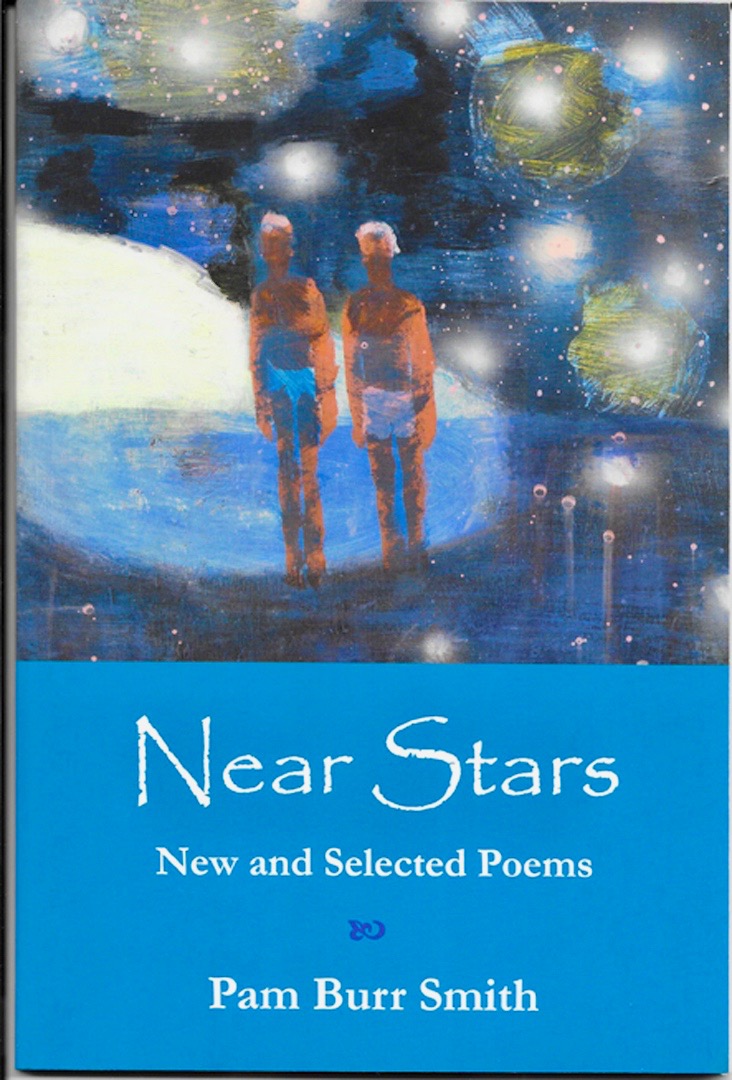
Near Stars: New and Selected Poems, by Pam Burr Smith.
Blackberry Books, 2019,
56 pages, paper, $14,
ISBN: 978-645162407
In her second collection, Near Stars: New & Selected Poems, Pam Burr Smith offers 47 poems, most of them one–pagers, prompted by diverse incidents and occasions: a gathering of friends, a flat tire, Wonder Bread, a visit to the health food store, a line from a Mavis Staples song. The verse unfolds in short stanzas, sometimes couplets, as Smith muses on the world around her.
Smith is a dog person — canines make cameos in a bunch of poems, including the lead–off “Amos in the Snow.” In “full deep thorough snow time,” the four–legged friend becomes one with the drifts. If the snow’s “agendas and claims are total now,” if it “owns our mortgages,” the dog remains unmoved, “a gentle, patient astronaut / at home among the galaxies.”
The poem “It” might remind you of the classic Charles Simic poem, “Two Riddles,” which plays a similar game with this nondescript yet ubiquitous noun, reveling in its imprecision. Smith’s rendering starts by exaggerating the tiny word’s might: “I love the quick slap and the authority of the word / It.” And it ends with a clever Simic–like twist: “It’s always something.” True enough.
Smith likes word play. Listening in on the conversation of a nephew and his young sister on a drive in the car, she follows the former’s attempt to make the latter say a bad word by adding and subtracting letters from “truck.” In her role as Aunt Pam, the poet fails to steer the game elsewhere and the f–word ends up echoing in her head.
With a book as warm and full of life as this one is, it seems unkind to note flaws, but for this reader there are a few. Several images felt stretched, such as “Frogs in chorus crunch summer to a close” (“A Field by a River”) and “I am spread out / diagonally strewn / soft across bamboo sheets // a sort of mind butter / over the food / of my soft bed” (“Enter the Day”). The use of “crunch” and the image of “mind butter” startle, but not in a favorable way. W. B. Yeats once proposed that a poem makes a sound when it’s finished “like the
click of the lid of a perfectly made box.” At times, Smith seems to snub her nose at this idea, preferring to end a verse with a kind of soft denouement, almost matter–of–fact. At times, one is reminded of contemplative Chinese poetry, as in the ending of “The Coming Storm”:
So I go inside
open the window
listen to the world sighing
watch restless branches
write new poems
on gray clouds.
The cover of Smith’s book features a painting, Couple on the Moon (2014), by painter Katherine Bradford. One of the poems in the collection, “Shero,” drew its inspiration from another Bradford painting, Woman Flying, in the Portland Museum of Art collection. The poem starts with a description of the painter’s flying caped “hero woman” and then shifts to a tribute to “Sheroes,” a group of women in Agra, India, victims of acid attacks who run a tea house. In the final four stanzas, Smith intertwines the painted woman and the women who run the “blessed restaurant” in Agra. “Something about ordinary goodness,” she concludes,
undressed–up, and unrelenting
saving us. Saving us. Over and over
from both the small and the monstrous.
The aforementioned Mavis Staples song–inspired poem riffs on the lyric “Love is the only transportation.” Taking her cue, Smith offers images of a mobile love. Love has “willing legs,” she writes, and declares, “The sound of love’s helicopter / is the sound of a beating heart.” In the original song, the lyric is completed by the rhyming line “To where there’s total communication.” Smith’s poems help transport us to that place: a world conveyed with aplomb and passion.
—Carl Little
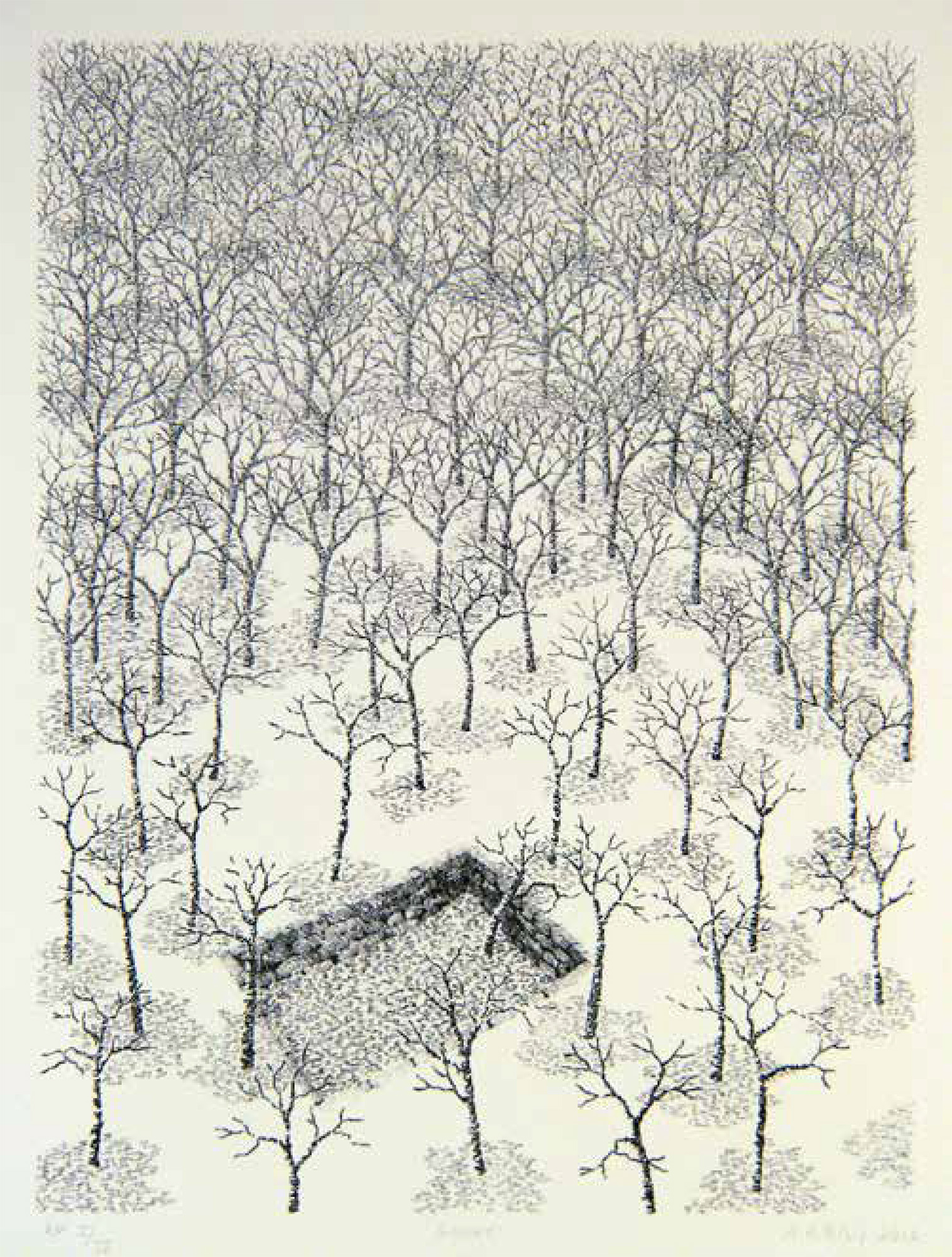
Alan Bray
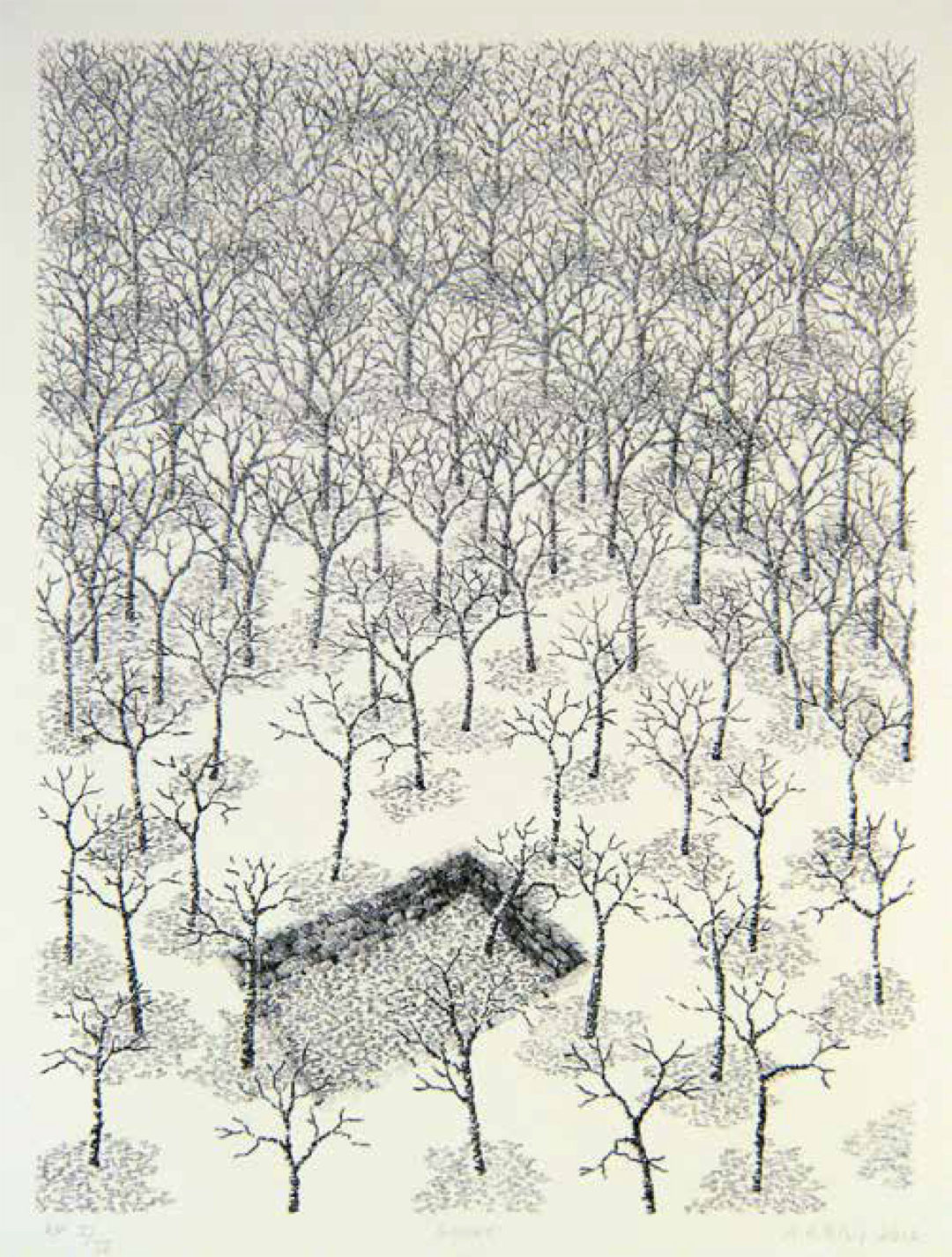
Alan Bray
Conrad Pinto
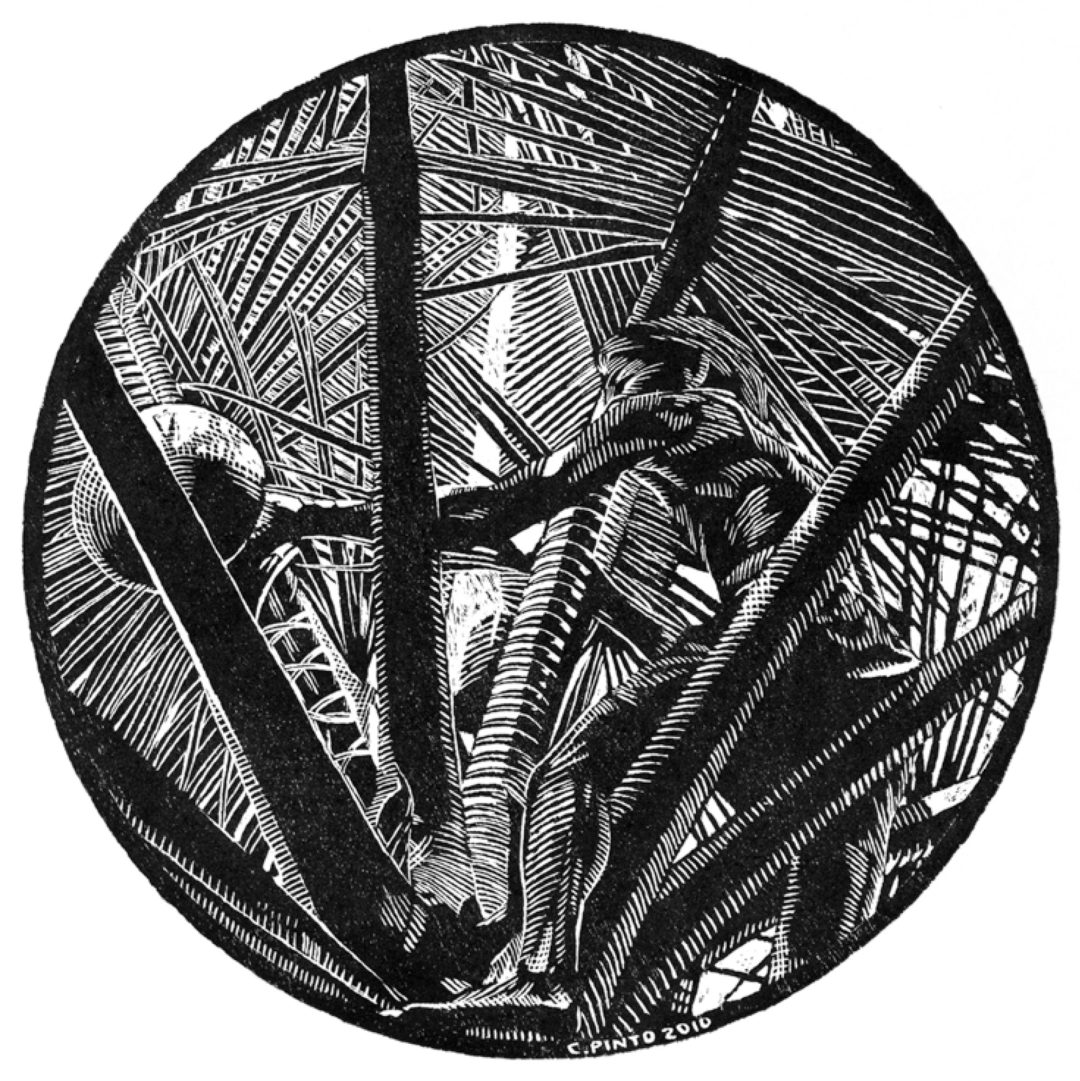
Conrad Pinto: has a Bachelors degree in Fine Art (Painting) from Goa College of Art, Goa, India. He is based in Goa and primarily works in the field of commercial art, specializing in pre-press processing and industrial reprography. He has worked extensively in the art of relief printmaking; namely woodcut and linocut mediums. He has done a series of prints portraying the traditional Goan way of life specially farming and other traditional occupations, many of which are rapidly fading away. Most of the prints are based on scenes from the village of Aldona where he lives.