
Common Name: A Collection of Poems
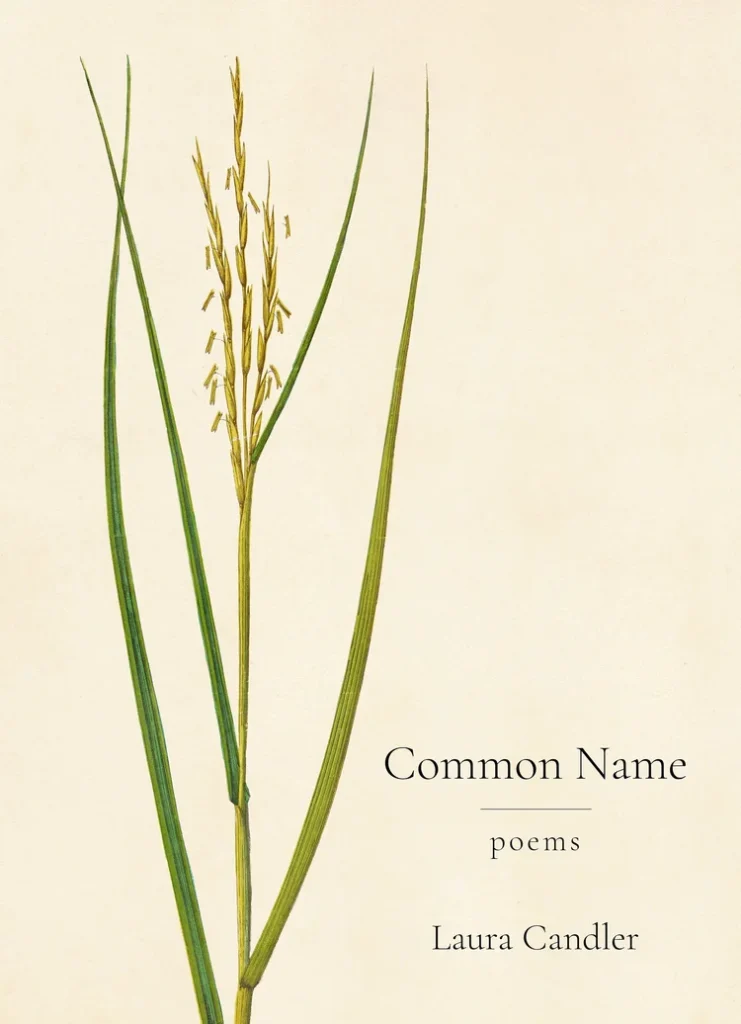
Common Name: A Collection of Poems, by Laura Candler.
Poets Corner and Toad Hall Editions,
Softbound, $14,
ISBN #978-8-9880867-8-9.
During a Zoom reading this past June, newly crowned Poets Corner 2026 chapbook contest winner Laura Candler shared a dozen or so poems from her collection, Common Name. Chosen by poet Aimee Nezhukumatathil , who introduced her, Candler wowed her online audience with poems that celebrated parenthood, gave voice to nature, and riffed on the seasons.
In the tender “First Breath of Spring,” the sound of spring peepers prompts thoughts on the preciousness of life. Wondering “what it’s like to spawn twelve hundred / so that one or two might survive // the bellyflop of metamorphosis,” Candler shifts to a frightening ER visit with her three-year-old daughter. She empathizes with the fellow parents fretting over a fever. “How strange it feels / to hold hope like that, the peepers nearby singing // not knowing what they will lose, / just believing so blindly in survival.”
In the startlingly titled “Sonnet for Margot with Three Vulvas, Two Penises, and a Merry-Go-Round,” Candler revels in the delightful freeform language of a daughter who “wonders out loud when she will grow / a penis and if eating strawberries will help.” A similar wonderment occurs in “Gap,” where the loss of two bottom teeth leads her child to squeeze women—not lemon—onto her fried fish.
In conversation with environmental activist Ayana Elizabeth Johnson at College of the Atlantic this past July, botanist and author Robin Wall Kimmerer noted how anthropomorphizing creatures can help us understand them and thereby increase our wonder. What Candler calls her “persona” poems, “written from the perspective of different species of animals and plants,” fulfill that promise. One of Common Name’s epigraphs, from a poem by Camille Dungy, underscores the intent in these poems: “Ask me if I speak for the snail and I will tell you / I speak for the snail.”
The poet offers five: American persimmon, marsh periwinkle, Tennessee cave salamander, common zinnia, and common loon. The writing in each is rapid fire. “Gavia immer (Common Loon)” begins in medias res, while fishing:
eating is stabbing is jabbing face
dagger aiming for eyes blinds prey
makes quick work our eyes red
of aurora’s winter tongue licking black
sky we dive dark lakes flash silver….
Candler offers brilliant short takes on summer and fall, capturing the essence of each. Here’s how the autumn poem ends:
October tumbles into November
like a jig into a reel.
The year-round birds flute & trill.
Candler lives in Sewanee, Tennessee, and her home state appears several times in the collection. “Hollow Chamber,” prompted by the Covenant School mass shooting in Nashville in March 2023, is an unsettling account of a young daughter’s pretend shooting game.
There is nary a wrong note in these 22 poems. Other favorites include “How I Fell in Love with a Butcher,” “Four Moons of Juniper,” “Self-Portrait” and “Circus.” Several poems recollect travels abroad, including “Learning Italian” and “Aperitivi in Milano.”
Chapbook judge Nezhukumatathil observes how Candler’s poems “remind us that close attention is its own kind of devotion, that to name what is fragile, fleeting, and alive means to love it more fully.” There is no way it could be said better.
–Carl Little